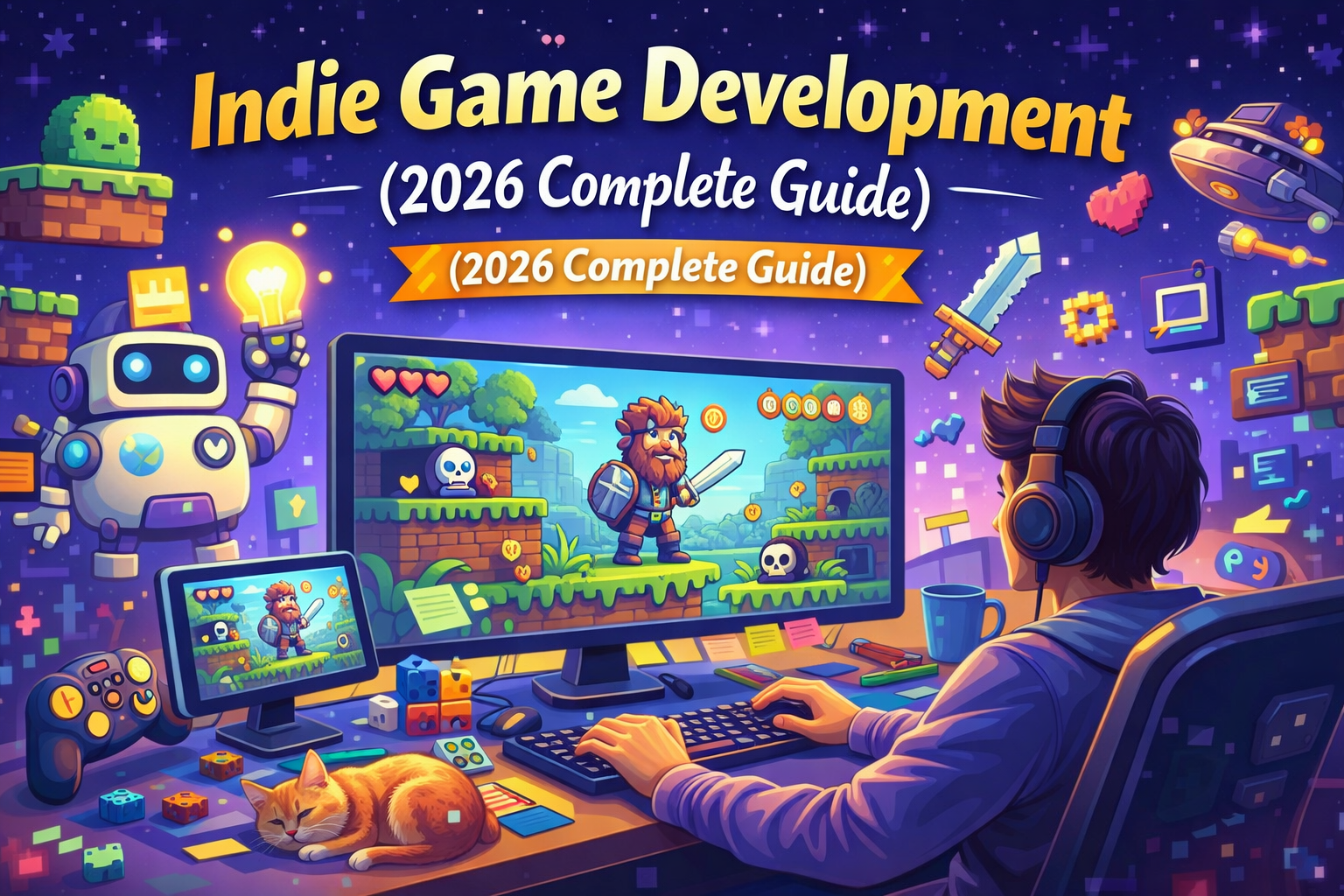

What Is Indie Game Development?
Indie game development refers to creating video games independently, without financial backing from large publishers. Indie developers are usually:
- Solo developers
- Small teams (2–10 people)
- Students or hobbyists
- Small startup studios
Unlike AAA studios, indie creators have creative freedom, smaller budgets, and limited marketing resources — but they also have flexibility and innovation power.
Some of the most successful indie games were created by small teams using affordable or free tools.
Why Indie Game Development Is Growing
The rise of:
Digital Distribution Platforms
Platforms like Steam and Epic Games Store have removed the need for physical copies and publishers.
How this helps developers:
- Publish games worldwide with a few clicks
- Automatic updates, patches, and analytics
- Built-in audiences searching for new indie games
- Fair revenue-sharing models for small studios
This means developers no longer need massive budgets to launch internationally.
Affordable & Powerful Game Engines
Modern game engines are either free or low-cost, making development accessible to beginners.
Impact:
- No upfront investment required
- Professional-quality graphics and tools
- Easy deployment to PC, console, and mobile
- Large communities and tutorials
Today, even one person can build games that look and feel professional.
Crowdfunding Opportunities
Crowdfunding platforms allow developers to fund games before release.
Why this matters:
- Reduces financial risk
- Builds a loyal fan base early
- Validates game ideas before full development
- Gives creative freedom without publishers
Many successful indie games started as crowdfunded projects.
YouTube & Twitch Exposure
Platforms like YouTube and Twitch have transformed game marketing.
Benefits:
- Free promotion through gameplay videos and streams
- Viral exposure from streamers and influencers
- Direct feedback from players
- Strong community building
A single viral video can turn a small indie game into a global hit.
Social Media Marketing
Social platforms help developers promote games without big marketing budgets.
How developers use social media:
- Share dev logs and behind-the-scenes clips
- Post short gameplay videos
- Interact directly with fans
- Build hype before launch
This direct connection creates trust and long-term player loyalty.
The Big Result
Because of these advancements:
- Solo developers can publish commercial games worldwide
- Small indie teams can compete with big studios
- Creative ideas matter more than budget
- Global audiences are just one upload away
Today, any passionate developer with the right tools and strategy can launch a successful game globally, making game development one of the most exciting and accessible creative industries in the world 🎮✨
has made it easier than ever for indie developers to launch games globally.
Today, even a solo developer can publish a commercial game worldwide.
Best Game Engines for Indie Game Development
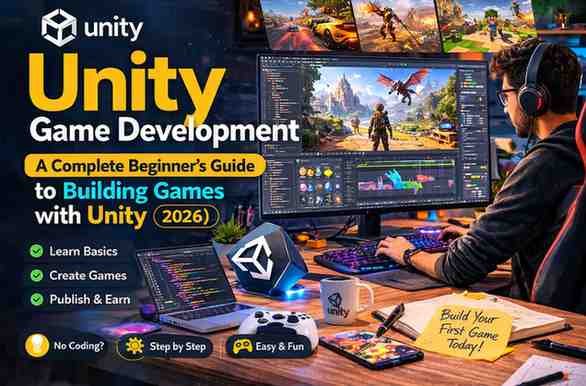
1. Unity
Overview
Unity is one of the most popular engines for indie developers because it supports 2D and 3D development and works on multiple platforms.
Why Indie Developers Choose Unity
- Large Asset Store
- Cross-platform publishing
- Strong mobile game support
- Beginner-friendly documentation
Best For
Mobile games, cross-platform indie games, small teams.
Official Website: https://unity.com
2. Unreal Engine
Overview
Unreal Engine is powerful and ideal for high-quality 3D indie games.
Why Indie Developers Choose Unreal
- Blueprint visual scripting
- High-end graphics
- Royalty-based model (free until revenue threshold)
Best For
3D indie action games, cinematic experiences.
Official Website: https://www.unrealengine.com
3. Godot
Overview
Godot is open-source and completely free.
Why Indie Developers Choose Godot
- No royalties
- Lightweight
- Growing community
Best For
2D games, experimental projects, open-source supporters.
Official Website: https://godotengine.org
4. GameMaker
Best for 2D indie games and platformers.
Indie Game Development Process (Step-by-Step)
1️⃣ Idea & Concept
- Define core gameplay
- Identify target audience
- Research competitors
2️⃣ Planning
- Create game design document (GDD)
- Define art style
- Set development timeline
- Define budget
3️⃣ Prototyping
- Build small playable demo
- Test core mechanics
- Gather feedback
4️⃣ Production
- Develop levels
- Add sound & music
- Optimize performance
5️⃣ Testing
- Beta testing
- Bug fixing
- Performance optimization
6️⃣ Launch & Marketing
- Create Steam page
- Promote on social media
- Reach out to influencers
Budget Breakdown for Indie Game Development
Typical indie game costs include:
Budget Breakdown for Indie Game Development

Game Engine (Often Free)
Most indie developers use free game engines, which removes the biggest upfront cost.
What this means:
- No payment until you start earning revenue
- Professional tools at zero cost
- Same engines used by commercial studios
Cost: ₹0 (revenue-share may apply after launch)
Art Assets
Art gives your game its visual identity.
Options:
- Create art yourself (lowest cost)
- Buy asset packs (characters, UI, environments)
- Hire freelance artists for custom work
Typical costs:
- Asset packs: ₹2,000 – ₹15,000
- Freelance art: ₹500 – ₹3,000 per asset
Tip: Many successful indie games use simple or stylized art to control costs.
Sound Design & Music
Sound effects and music greatly impact player immersion.
Includes:
- Background music
- UI sounds
- Effects like footsteps, attacks, ambience
Typical costs:
- Stock sound packs: ₹1,000 – ₹5,000
- Custom music: ₹5,000 – ₹50,000 (depending on length and quality)
Budget tip: Short looping tracks save money and work well for indie games.
Marketing & Promotion
Even great games need visibility.
Common marketing expenses:
- Trailer creation
- Social media ads
- Influencer outreach
- Game store page assets
Typical budget:
- Minimal organic marketing: ₹0 – ₹5,000
- Paid ads & promotion: ₹10,000 – ₹50,000+
Reality check: Many indie developers spend more on marketing than development.
🧾 Publishing & Platform Fees
Most platforms charge a one-time publishing fee.
Examples:
- PC stores: One-time listing fee
- Mobile stores: Annual or lifetime developer account
Typical cost: ₹2,000 – ₹10,000 (one-time)
Example Indie Budget Scenarios
🔹 Solo Developer (Ultra-Low Budget)
- Engine: Free
- Art: Free / basic assets
- Sound: Free libraries
- Marketing: Organic
Total: ₹5,000 – ₹10,000
🔹 Small Indie Project (Balanced Quality)
- Art assets: ₹15,000
- Sound & music: ₹10,000
- Marketing: ₹20,000
Total: ₹40,000 – ₹60,000
Some indie developers launch games with budgets under $5,000. Others invest significantly more.
Budget depends on scope and team size.
How Indie Developers Make Money
Indie developers monetize through:
How Indie Developers Make Money
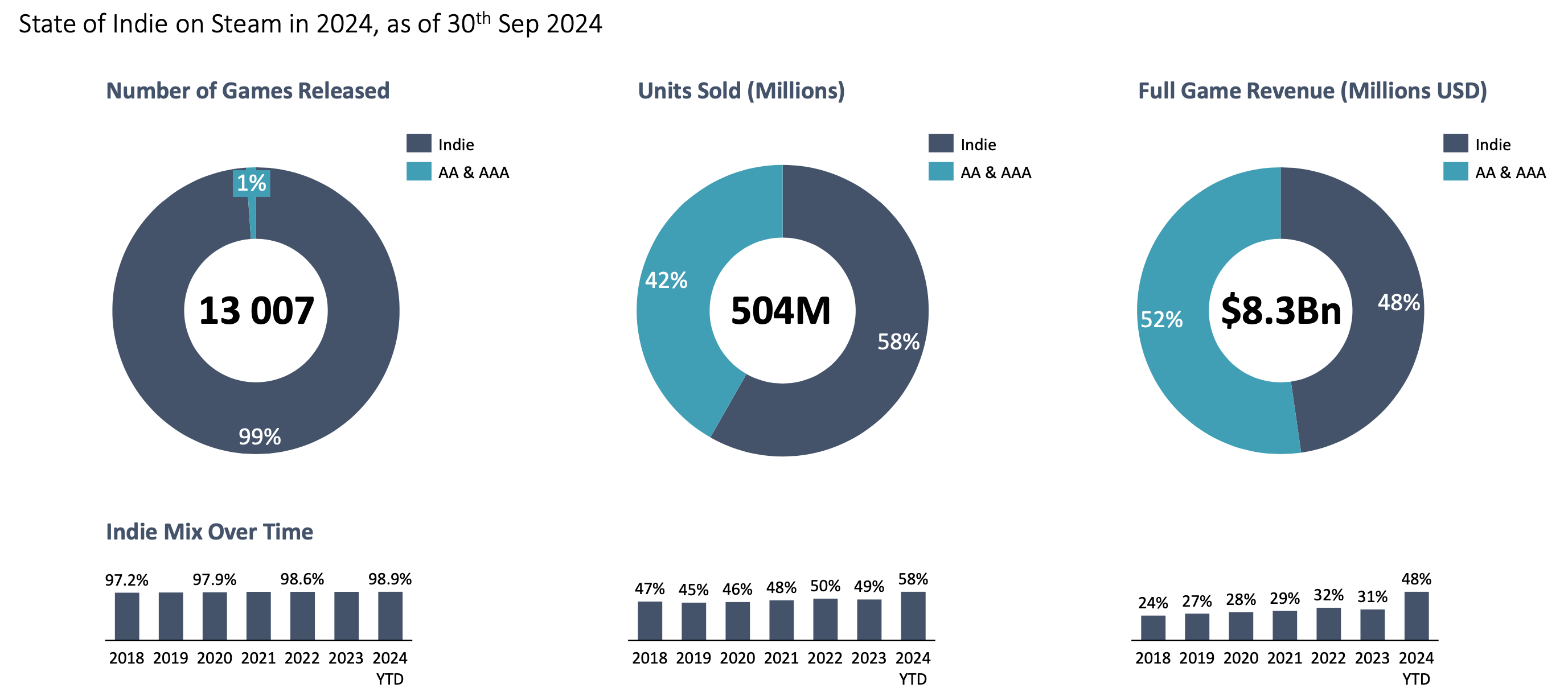
Indie developers don’t rely on just one source of income. Most successful indie games earn through multiple monetization channels combined.
Steam Sales
Steam is the biggest marketplace for indie PC games.
How developers earn:
- One-time purchase (₹300–₹1,500 per game)
- Seasonal sales massively boost downloads
- Reviews and wishlists drive long-term sales
Why it works: Huge global audience and strong discovery tools.
Epic Games Store
The Epic Games Store is more indie-friendly in revenue sharing.
Benefits:
- Lower revenue cut than many platforms
- Less competition than Steam
- Opportunities for exclusive deals
Best for: Indie devs with polished PC games looking for visibility.
Mobile App Stores
Mobile games earn through Google Play Store and Apple App Store.
Monetization methods:
- Free-to-play model
- In-app purchases
- Ads
Why mobile works: Massive user base and recurring daily revenue.
In-App Purchases (IAPs)
In-app purchases allow players to buy:
- Cosmetic items
- Extra levels
- Characters or power-ups
Advantages:
- Continuous income
- Optional for players
- Works well with free games
Many indie games earn more from IAPs than from downloads.
Advertisements
Ads are common in mobile indie games.
Types of ads:
- Rewarded ads (watch to earn rewards)
- Banner ads
- Interstitial ads
Why devs use ads:
- Earn money from free players
- Simple to integrate
- Passive income model
DLC (Downloadable Content)
DLC lets developers sell extra content after launch.
Examples:
- New levels
- Expansion packs
- Story chapters
Why it’s powerful:
Keeps the game alive and increases lifetime revenue per player.
Crowdfunding (Kickstarter)
Platforms like Kickstarter help developers earn before the game is finished.
How it helps:
- Funds development early
- Builds a loyal community
- Validates the game idea
- Reduces financial risk
Backers often become the game’s first promoters.
The Smart Indie Strategy
Most successful indie developers combine:
- Upfront sales (PC/console)
- Recurring income (IAPs, ads, DLC)
- Early funding (crowdfunding)
This mix creates stable, long-term earnings, even for solo developers.
Success depends on marketing, quality, timing, and niche selection.
Marketing Strategy for Indie Games
Many indie games fail not because of quality — but due to lack of marketing.
Important Marketing Steps for Indie Games
Build Community Early
Start building a community as soon as development begins, not after launch.
Why this matters:
- Early fans become your first buyers
- You get feedback while building the game
- Creates emotional investment in your project
A small but loyal community is more powerful than thousands of silent followers.
Post Development Updates Regularly
Sharing progress keeps people interested and builds trust.
What to post:
- Gameplay clips
- New features
- Bug fixes
- Behind-the-scenes screenshots
Best platforms: Twitter/X, Reddit, Discord, and short-form video platforms. Consistency matters more than perfection.
Create a Strong Trailer
Your trailer is your first impression.
A good indie trailer should:
- Show gameplay within the first 5 seconds
- Be 60–90 seconds long
- Highlight the core fun of the game
- End with a clear call-to-action (wishlist, follow, demo)
Many players decide in seconds whether they care—trailers decide that moment.
Collect an Email List
Email is one of the most reliable marketing tools.
Why email lists are powerful:
- You own the audience (no algorithm issues)
- Direct communication during launch
- Higher conversion than social media
Even 500 genuine subscribers can make a big difference on launch day.
Use a Discord Server
A Discord server acts as your game’s home base.
Benefits:
- Real-time communication with fans
- Easy sharing of updates and demos
- Strong community bonding
- Helps with beta testing
Many successful indie games grew entirely from active Discord communities.
Engage with Reddit Communities
Reddit is extremely powerful—but only if used correctly.
Best practices:
- Join game dev and indie game subreddits
- Share progress, not spam links
- Ask for feedback instead of selling
- Follow each subreddit’s rules
Reddit rewards honesty and transparency. One well-received post can drive massive attention.
Influencer marketing and YouTube gameplay videos can boost exposure significantly.
Pros and Cons of Indie Game Development
Pros
- Creative freedom
- Full ownership
- Flexible work environment
- Potential high profit margin
Cons
- Financial risk
- Limited marketing budget
- Heavy workload
- Competitive market
Skills Needed for Indie Game Development
You don’t need to master everything, but these skills help:
- Programming (C#, C++, GDScript)
- Game design principles
- 3D or 2D art basics
- Audio integration
- Marketing fundamentals
Small teams often divide these roles.
Common Mistakes Indie Developers Make
- Starting with large projects
- Ignoring marketing
- Over-polishing minor features
- Skipping community building
- Not testing early
Start small. Focus on core gameplay.
System Requirements for Indie Game Development
Minimum Setup:
- 8GB RAM
- SSD
- Mid-range GPU
For 3D:
- 16GB RAM recommended
- Dedicated GPU
Real-World Example of Indie Success
Many successful indie games started as small passion projects. With smart marketing and consistent development, small teams can compete globally.
Indie development is challenging but achievable.
Beginner Roadmap
- Choose a beginner-friendly engine
- Follow official tutorials
- Build a small game
- Publish on itch.io or Steam
- Learn from feedback
- Improve next project
FAQ
Is indie game development profitable?
It can be, but there are no guarantees. Most success depends on marketing and quality.
Can one person make a game?
Yes. Solo developers regularly release indie titles.
Do I need coding skills?
Most engines require some programming knowledge, though visual scripting helps beginners.
How long does it take to make an indie game?
Small games can take 3–6 months. Larger ones can take years.
Conclusion
Indie game development offers creative freedom and global reach without needing a large studio. With powerful engines like Unity, Unreal Engine, and Godot, developers today can build commercial-quality games at little to no upfront cost.
Success requires patience, planning, consistent development, and smart marketing. Start small, focus on learning, and build one project at a time.
If you’re serious about entering indie game development, pick an engine today and begin your first prototype.
You have not enough Humanizer words left. Upgrade your Surfer plan.