
Introduction
Game development is no longer limited to large studios with massive budgets. Today, anyone with a computer and an internet connection can start building games. The rise of free engines and open-source tools has made it possible for students, hobbyists, and indie developers to create professional-quality games without upfront software costs.
If you’re searching for the best game development software free, you likely want something powerful, beginner-friendly, and capable of publishing games on platforms like PC, mobile, or web. But with so many options available, choosing the right tool can feel confusing.
This complete 2026 guide brings everything into one place. You’ll find detailed comparisons, features, pros and cons, system requirements, monetization options, and a beginner roadmap. By the end of this article, you’ll know exactly which free game engine fits your goals.
What Is the Best Game Development Software Free?
The best game development software free options in 2026 include Unity, Unreal Engine, and Godot. These engines offer powerful 2D and 3D tools, strong community support, and the ability to publish commercial games with no upfront license cost.
Quick Comparison Table
| Software | 2D/3D | Skill Level | Export Platforms | Royalty Model | Best For |
|---|---|---|---|---|---|
| Unity | 2D & 3D | Beginner–Advanced | PC, Mobile, Console | Free tier available | Indie & mobile games |
| Unreal Engine | 3D & AAA | Intermediate–Advanced | PC, Console | Royalty after revenue threshold | High-end 3D |
| Godot | 2D & 3D | Beginner–Intermediate | PC, Mobile, Web | Fully open-source | Indie & 2D |
| GameMaker | 2D | Beginner | PC, Mobile | Free trial / limited free | 2D games |
| CryEngine | 3D | Advanced | PC | Royalty-based | Realistic 3D |
| GDevelop | 2D | Beginner (No-code) | Web, Mobile | Free tier | Beginners |
| Construct | 2D | Beginner | Web | Limited free version | Browser games |
Best Game Development Software Free
1. Unity
Overview
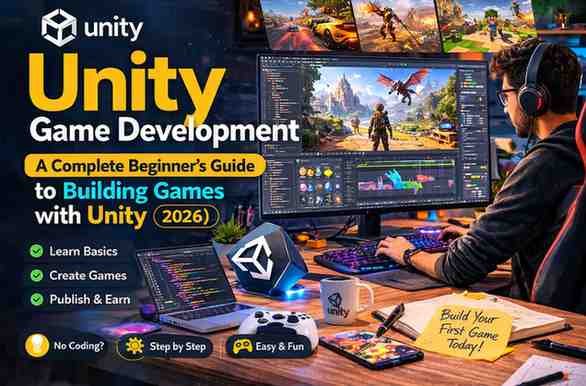
Unity is one of the most widely used game engines in the world, supporting both 2D and 3D development. It is especially popular among indie developers and mobile game creators due to its flexibility and large ecosystem.
Key Features
- Powerful 2D and 3D development tools
- Large Asset Store with thousands of plugins and templates
- Cross-platform publishing (PC, Android, iOS, WebGL, console)
- C# scripting support
- Built-in physics and animation systems
- AR/VR development tools
Pricing & License
Unity offers a free Personal plan for small developers. Paid plans are required once revenue exceeds Unity’s threshold limits.
System Requirements
- Minimum: 8GB RAM, modern CPU
- Recommended: 16GB RAM, dedicated GPU for 3D projects
Pros
- Beginner-friendly learning curve
- Strong mobile game development tools
- Massive community and documentation
- Extensive asset marketplace
Cons
- Advanced 3D games require optimization
- Revenue-based pricing model
- Large project files can become heavy
Best For
Indie developers, students, startups, and mobile game creators.
Official Website
2. Unreal Engine
Overview
Unreal Engine is known for delivering AAA-level 3D graphics and cinematic-quality visuals. It is widely used in professional game studios and film production.
Key Features
- Blueprint visual scripting (no-code option)
- Advanced real-time lighting system (Lumen)
- High-quality rendering engine
- Realistic physics simulation
- Strong multiplayer support
- Cinematic tools for animation
Pricing & License
Unreal Engine is free to use. Developers pay royalties only after exceeding Epic Games’ revenue threshold.
System Requirements
- Minimum: 8GB RAM
- Recommended: 16GB+ RAM, strong GPU for high-end 3D
Pros
- Industry-leading graphics
- Powerful tools for large-scale games
- Royalty-free until revenue threshold
- Excellent 3D rendering quality
Cons
- Steeper learning curve
- Higher hardware requirements
- Larger installation size
Best For
AAA-style games, 3D action titles, advanced developers.
Official Website
3. Godot
Overview
Godot is a free and open-source game engine that has grown rapidly in popularity. It supports both 2D and 3D development with a lightweight installation.
Key Features
- Fully open-source
- Built-in GDScript (Python-like scripting)
- Strong 2D engine architecture
- Small file size
- Cross-platform export
- Scene-based design system
Pricing & License
Completely free with no royalties or revenue limits.
System Requirements
- Runs well on low-end PCs
- 4–8GB RAM minimum
Pros
- No royalty fees
- Lightweight and fast
- Beginner-friendly scripting
- Active community
Cons
- Smaller asset ecosystem
- 3D tools still improving compared to Unreal
Best For
Indie developers, students, and open-source supporters.
Official Website
4. GameMaker
Overview
GameMaker focuses primarily on 2D game development and is well known for ease of use and fast prototyping.
Key Features
- Drag-and-drop game creation
- Built-in scripting language (GML)
- Fast 2D rendering engine
- Sprite-based development
- Multi-platform export options
Pricing & License
Free version available with limitations. Advanced exports require paid subscription plans.
System Requirements
- Lightweight engine
- 4–8GB RAM recommended
Pros
- Great for beginners
- Excellent for 2D platformers
- Quick game prototyping
- Easy to learn
Cons
- Limited 3D support
- Advanced publishing requires paid license
Best For
2D platformers, beginners, and small indie projects.
5. CryEngine
Overview
CryEngine is known for delivering highly realistic graphics and advanced rendering capabilities.
Key Features
- High-end rendering engine
- Advanced lighting effects
- Realistic environmental simulation
- Sandbox editor
Pricing & License
Free to start with royalty-based model after revenue generation.
System Requirements
- Strong GPU required
- 16GB RAM recommended for large projects
Pros
- Stunning visuals
- Advanced rendering power
- Professional-grade tools
Cons
- Complex interface
- Steep learning curve
- Not ideal for beginners
Best For
Experienced developers creating realistic 3D games.
6. GDevelop
Overview
GDevelop is a no-code, open-source engine designed for beginners and hobby developers.
Key Features
- Visual event-based system
- No programming required
- Web and mobile export
- Built-in asset library
Pricing & License
Free to use with optional paid cloud features.
System Requirements
- Lightweight
- Works on basic PCs
Pros
- No coding skills required
- Beginner-friendly interface
- Fast web game development
Cons
- Limited advanced customization
- Not ideal for large-scale games
Best For
Students, hobbyists, and first-time developers.
7. Construct
Overview
Construct is a browser-based 2D game engine focused on ease of use and quick development.
Key Features
- Drag-and-drop interface
- Event-based visual scripting
- HTML5 export
- Cloud-based editor
Pricing & License
Free version available with limitations. Paid plans unlock advanced features.
System Requirements
- Runs in web browser
- Low system requirements
Pros
- Extremely beginner-friendly
- Fast prototyping
- Ideal for web games
Cons
- Limited free version
- Mostly focused on 2D
Best For
Browser games, beginners, and educational projects.
How to Choose the Right Free Game Development Software
Consider the following:
1. 2D vs 3D
If you want simple platformers, choose Godot or GameMaker. For 3D games, Unreal or Unity is better.
2. Coding vs No-Code
If you don’t want programming, try GDevelop or Blueprint in Unreal.
3. Target Platform
- Mobile → Unity
- PC AAA → Unreal
- Web → Construct
4. Community Support
Larger communities mean more tutorials and problem-solving help.
System Requirements Guide
1. Mid-Range 3D PC Requirements
Key Specs:
- 8GB RAM – Enough for most mid-range games and 3D modeling projects. Handles multiple textures, models, and moderate multitasking.
- SSD Storage – Solid State Drives dramatically reduce load times for games and assets compared to traditional HDDs.
- Mid-range GPU – A graphics card that can handle 3D rendering at medium settings, suitable for popular engines like Unity or Unreal at modest resolutions.
- Modern CPU (dual-core or quad-core) – Sufficient for game logic, physics, and basic AI.
Performance:
- Runs most indie or moderately complex 3D games smoothly.
- Capable of light 3D development, especially with optimized assets.
- Examples: GTX 1650, RX 5500 XT, or similar.
Note: Lightweight engines like Godot are optimized to work efficiently even on mid-range PCs, so you don’t need the highest-end hardware to start 3D projects.
2. High-End 3D PC Requirements
Key Specs:
- 16GB RAM or more – Handles large scenes, complex textures, and multitasking in development environments.
- Dedicated GPU – Required for realistic rendering, high-resolution textures, and advanced lighting effects.
- Modern CPU – A multi-core processor (quad-core or higher) ensures smooth simulations and faster compilation of game assets.
- SSD or NVMe storage – For quick asset loading and faster build times.
Performance:
- Can run AAA games at high settings or complex 3D projects in engines like Unreal Engine or Unity.
- Suitable for professional 3D modeling, animation, and game development.
- Examples: RTX 3060/3070, Radeon RX 6700 XT, or similar.
3. Lightweight Engines and Optimization
- Godot Engine and similar lightweight tools are designed for efficiency:
- Work well on lower-end PCs with limited RAM and mid-range GPUs.
- Ideal for indie developers or learners who don’t have high-end hardware.
- Focus on optimized assets and simpler lighting for smooth performance.
💡 Summary Table of Requirements
| Level | RAM | GPU | CPU | Storage | Notes |
|---|---|---|---|---|---|
| Mid-Range 3D | 8GB | Mid-range dedicated | Modern CPU (dual/quad-core) | SSD | Runs most indie 3D games and development projects; Godot works well |
| High-End 3D | 16GB+ | High-end dedicated | Modern multi-core CPU | SSD/NVMe | Runs AAA games, professional 3D projects, advanced graphics and simulations |
Free vs Paid Versions Explained
Many engines offer:
- Free personal license
- Revenue threshold before royalties
- Paid upgrades for enterprise tools
Always read official license terms carefully.
Can You Monetize Games Built with Free Software?
Yes. Most free engines allow commercial publishing.
You can monetize via:
- Steam
- Google Play Store
- Apple App Store
- In-app purchases
- Ads
However, revenue depends on game quality and marketing. There are no guaranteed earnings.
Beginner Roadmap (Step-by-Step)
- Learn basic programming (C# or GDScript).
- Download a beginner-friendly engine.
- Build a small 2D game first.
- Test frequently.
- Publish a demo version.
Starting small reduces overwhelm.
Common Mistakes to Avoid
- Choosing advanced 3D engine too early
- Ignoring official documentation
- Skipping game design basics
- Trying to build a large game first
Focus on learning fundamentals.
Best Free Learning Resources
- Official engine documentation
- YouTube tutorials
- Online forums
- Game development communities
Always use official websites for downloads.
Real-World Use Cases
Student Project
A computer science student builds a 2D game in Godot for a class assignment.
Indie Developer
A solo developer launches a mobile game using Unity.
Hobbyist
A beginner uses GDevelop to build a simple web game without coding.
Expert Tips for Success
- Participate in game jams
- Keep project scope small
- Focus on gameplay over graphics
- Use version control (like Git)
- Test early and often
Game development is a long-term learning process.
Frequently Asked Questions
1. Is free game development software really free?
Yes, most engines offer free tiers with revenue limits or royalty structures.
2. Do I need coding knowledge?
Not always. Some engines offer visual scripting.
3. Which engine is best for beginners?
Godot and GDevelop are beginner-friendly options.
4. Can I publish commercial games?
Yes, but check each engine’s license terms.
5. What is the easiest 2D engine?
GameMaker and Godot are popular for 2D games.
6. Which software works on low-end PCs?
Godot and GDevelop are lightweight choices.
Conclusion
Choosing the best game development software free depends on your goals, skill level, and target platform. Unity offers flexibility, Unreal delivers powerful 3D visuals, and Godot provides open-source freedom. No-code tools like GDevelop make entry easier for beginners.
Start small, focus on learning fundamentals, and choose an engine that matches your experience level. With consistent practice and realistic expectations, you can build and publish your first game without spending money on software licenses.
Pick one engine today, follow a beginner tutorial, and take the first step toward creating your own game.
You have not enough Humanizer words left. Upgrade your Surfer plan.